Off-Leash Recall Training: A Step-by-Step Progression

Off-leash reliability is the far end of recall training, not a separate skill — and jumping straight to it before the basics are solid is how dogs end up loose in traffic or chasing wildlife. This guide picks up where basic recall leaves off and lays out the specific progression to genuine off-leash trust.
Prerequisites before removing the leash at all
A dog should already have a near-100% reliable recall on a long line, across multiple environments, with real distractions present (see our guide to teaching a reliable recall) before off-leash work in any unenclosed space begins. Off-leash training doesn't build the underlying skill — it only tests whether the skill already built is strong enough to survive without the safety net.
Stage 1: fully enclosed, low-distraction space
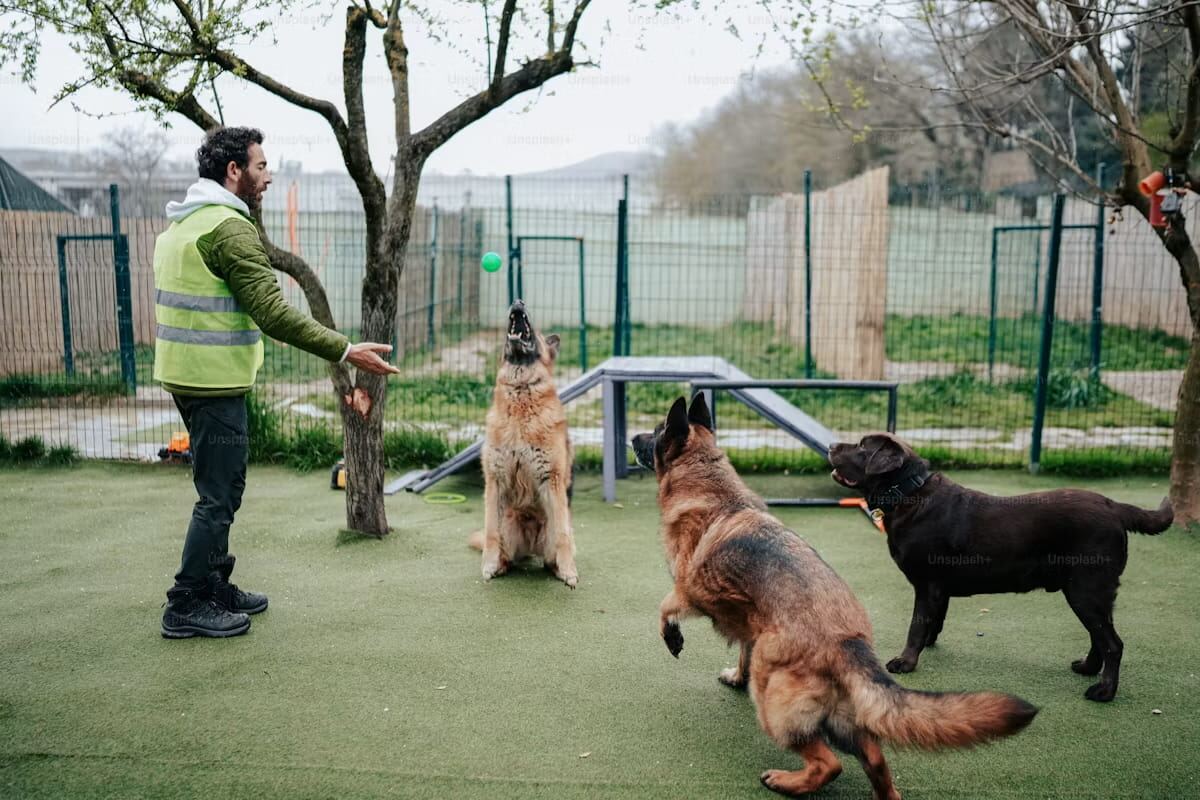
A securely fenced yard or an enclosed dog park with no other dogs present is the right first setting. Practice regular recalls, rewarding generously, and pay attention to how quickly the dog responds compared to their long-line performance — some drop-off in speed the first few off-leash sessions is normal and not a sign of failure.
Stage 2: enclosed space with mild distraction
Add a mild distraction inside the same enclosed space — a dropped treat, a familiar person walking by, a toy on the ground. If reliability holds above roughly 90%, move forward. If it drops noticeably, go back to the long line at this distraction level before trying off-leash again.
Stage 3: a long line, dragging but not held
A useful transition step: attach the long line but let it drag on the ground instead of holding it. This gives a physical safety backup (you can step on it if needed) while letting the dog experience genuine freedom of movement, which changes how a recall feels to practice compared to being visibly tethered.
Stage 4: open, unenclosed space with a reliable dog only
This stage should only start once recall has been consistently reliable through every earlier stage, across multiple sessions, on multiple days — not just one good run. Choose an open area with good visibility, minimal traffic or wildlife risk, and check local leash laws first, since off-leash requirements vary significantly by location and by park.
Reading the signs a dog isn't ready yet
- Hesitating or ignoring the recall word even occasionally on the long line — reliability needs to be consistent, not just usually good.
- A strong prey drive around wildlife or other dogs that hasn't specifically been proofed against.
- Recent history of bolting, chasing, or getting spooked in open spaces.
- Any anxiety or reactivity around unpredictable environments — see our guide to street reactivity if this applies.
Keep reinforcing forever, not just during training
A common mistake once off-leash recall feels solid is to quietly stop rewarding it, assuming the behavior is now permanent. Recall is a behavior like any other — it needs occasional real reinforcement indefinitely, even if it's just praise most of the time with an occasional high-value treat, or it can gradually erode, especially in a dog with a strong independent streak.
Sources
- American Kennel Club. "How to Train Your Dog to Come When Called." akc.org